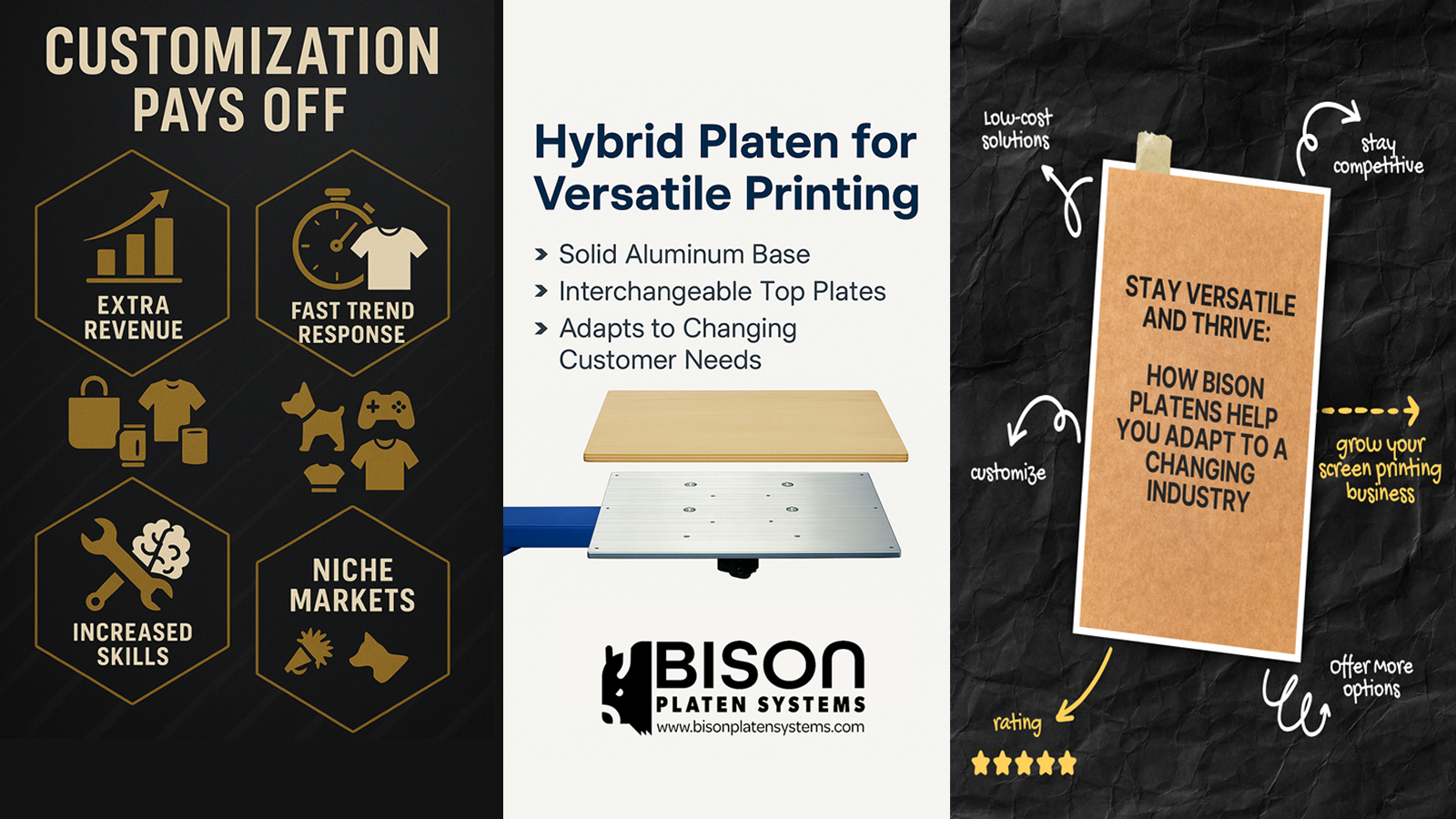
When it comes to screen printing, selecting the right platen can significantly impact your print quality, efficiency, and overall production. Whether you are using a manual or automatic press, understanding the different types of platens available can help you make an informed decision.
1. Understanding the Importance of a Platen
A platen is the flat surface where garments or substrates are placed during screen printing. The quality and material of the platen can affect print consistency, adhesion, and durability. Choosing the wrong platen can lead to misalignment and print issues.
2. Types of Screen Printing Platens
a) Standard Aluminum Platens
- Ideal for high-volume printing
- Common for automatic presses
- Great for tees, hoodies, and everyday production
- Fixed-size (less flexible for custom jobs)
b) Wooden Platens
- Budget-friendly vs. aluminum
- Highly customizable (cut to job-specific sizes)
- Common for manual presses
- Can warp over time with heat and moisture
c) Specialty Platens
- Sleeve platens: narrow prints on sleeves and pant legs
- Youth platens: smaller boards for kids garments
- Hat/cap platens: curved surface for headwear
- Double sleeve platens: print both sleeves in one cycle
3. Factors to Consider When Choosing a Platen
a) Material durability
If you print in high volumes (especially on automatic presses), aluminum is typically the best long-term investment due to heat resistance and durability. For manual printing, wood can be a cost-effective option with easy customization.
b) Compatibility with your press
Ensure the platen and bracket system match your press platform. Some brands (like Riley Hopkins / Hopkins BWM) may require specific bracket patterns for a secure attachment and stable registration.
c) Printing size and versatility
Choose a platen size that covers most of your work. If you print a wide variety of garments or placements, plan for multiple sizes (or a system that makes swapping sizes affordable).
d) Heat and ink behavior
Heat-tolerant platens reduce warping and help keep prints consistent—especially when flashing and curing plastisol on repeat runs.
4. Maintaining Your Screen Printing Platen
- Clean ink residue and adhesive regularly
- Avoid excessive heat exposure on wood platens
- Replace worn rubber tops / tape surfaces as needed
Final thoughts
The right platen improves print quality and workflow. For manual presses, wood can be a flexible and affordable option. For high-volume and automated work, aluminum can pay off in durability and consistency.
Tell us your press model and what you’re printing (tees, sleeves, pockets, youth, etc.).
See products or email sales@bisonplatensystems.com.