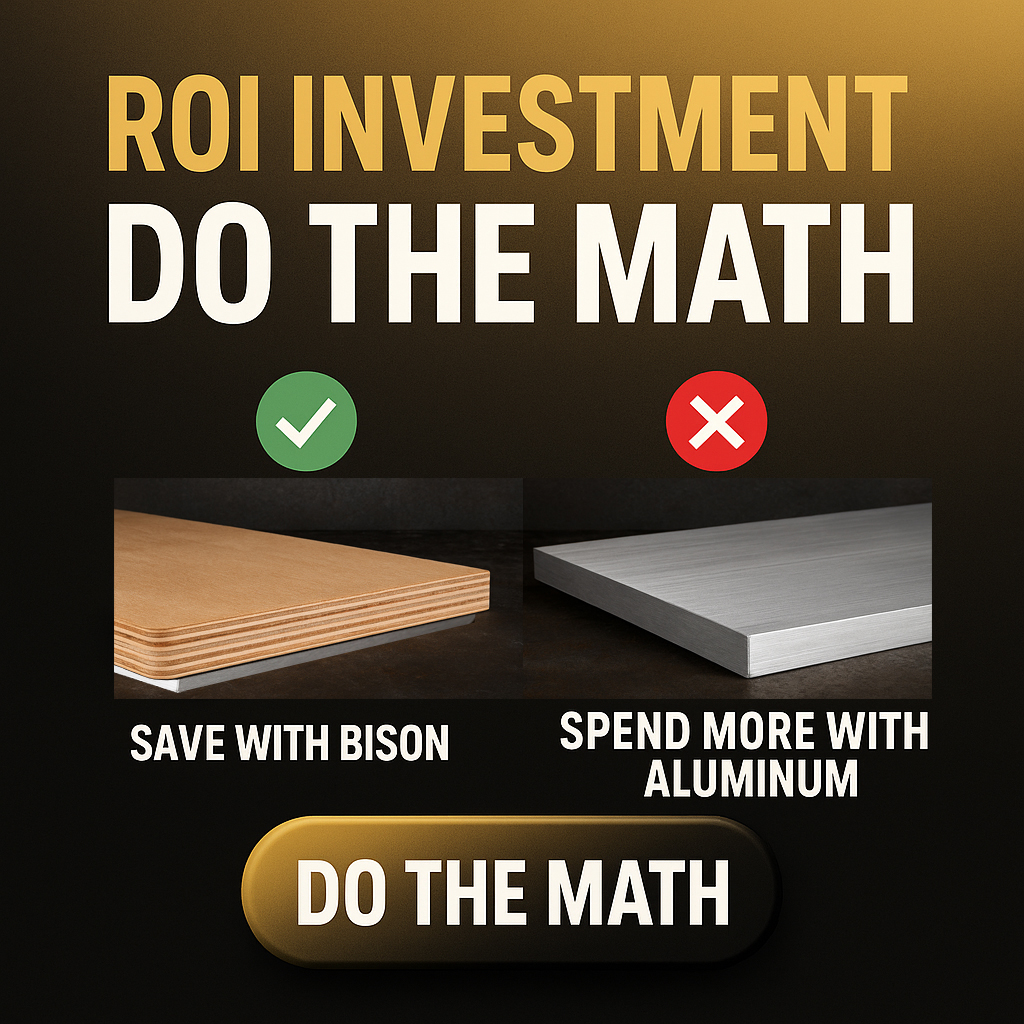
When it comes to screen printing platens, both cabinet-grade plywood and aluminum have their strengths — but the best solution often lies in combining the two.
The Pros and Cons
Cabinet-Grade Plywood Platens:
- Pros:
- Lightweight and easy to handle
- Excellent screw and fastener retention
- Affordable and easy to customize for specialty jobs
- Slight natural “give” for better garment adhesion during printing
- Cons:
- Can eventually wear down under extreme heavy use
- Less heat resistance compared to metal
Aluminum Platens:
- Pros:
- Ultra-durable and resistant to warping
- Handles high heat and pressure easily
- Long lifespan even under industrial-level production
- Cons:
- Heavier and harder to modify
- Expensive to replace or customize for different garment shapes
- Slicker surface can require more prep for perfect garment adhesion
Bison’s Best-of-Both-Worlds Approach
At Bison Platen Systems, we combine the best features of both materials:
- A 1/4-inch thick aluminum base for durability, stability, and heat resistance.
- A precision-mounted cabinet-grade plywood top for easy customization, better garment grip, and a cost-effective surface you can adapt for specialty prints.
The result:
- Rock-solid performance for heavy production
- Customizable surfaces for sleeves, shoes, bags, and more
- Longer platen life at a fraction of the replacement cost of full aluminum platens
Why It Matters
In today’s fast-changing print industry, versatility wins. Bison’s hybrid platens are designed to grow with you — not slow you down with overpriced upgrades or limited options.
- Built for speed
- Built for flexibility
- Built for the real world
Want a hybrid setup that fits your press?
Browse options on ScreenPrintingProducts.htm
or email sales@bisonplatensystems.com
for a quick recommendation.